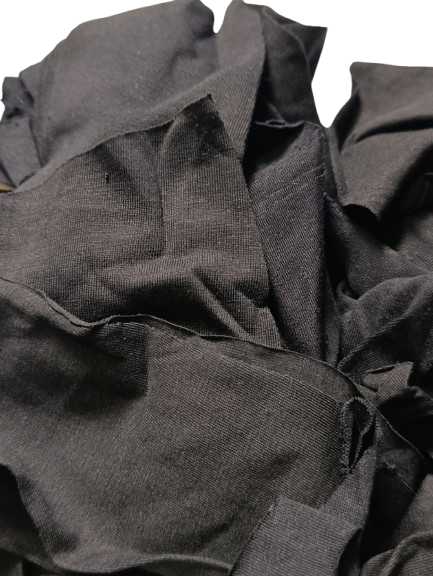
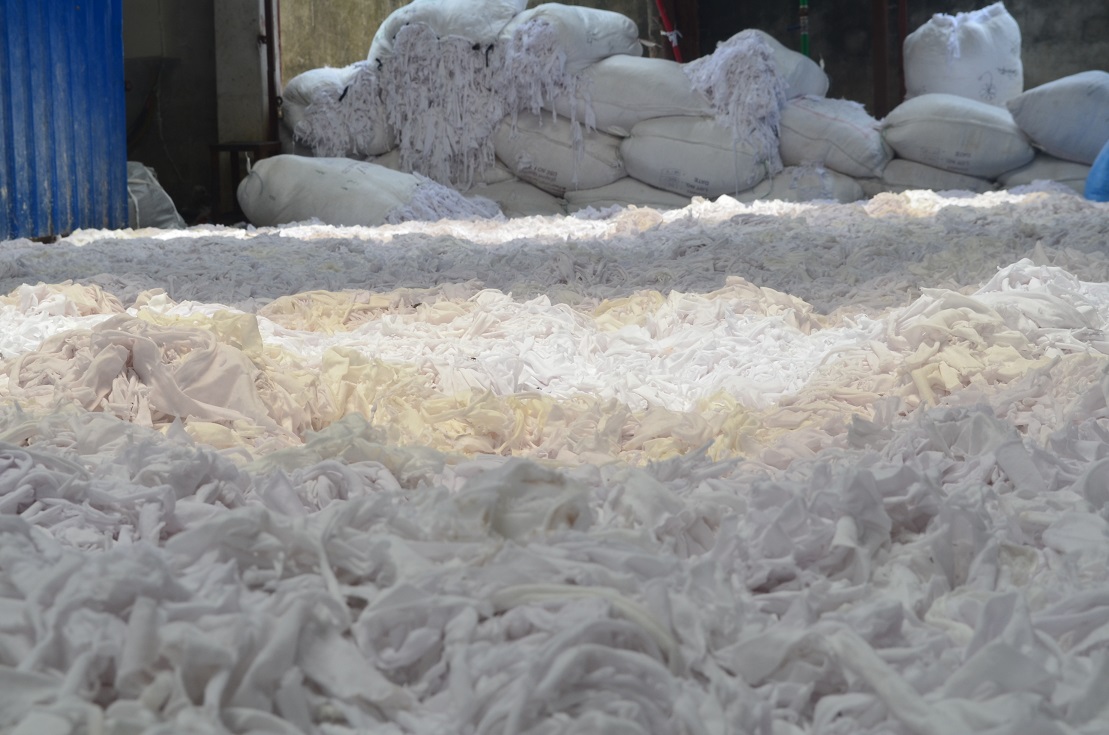
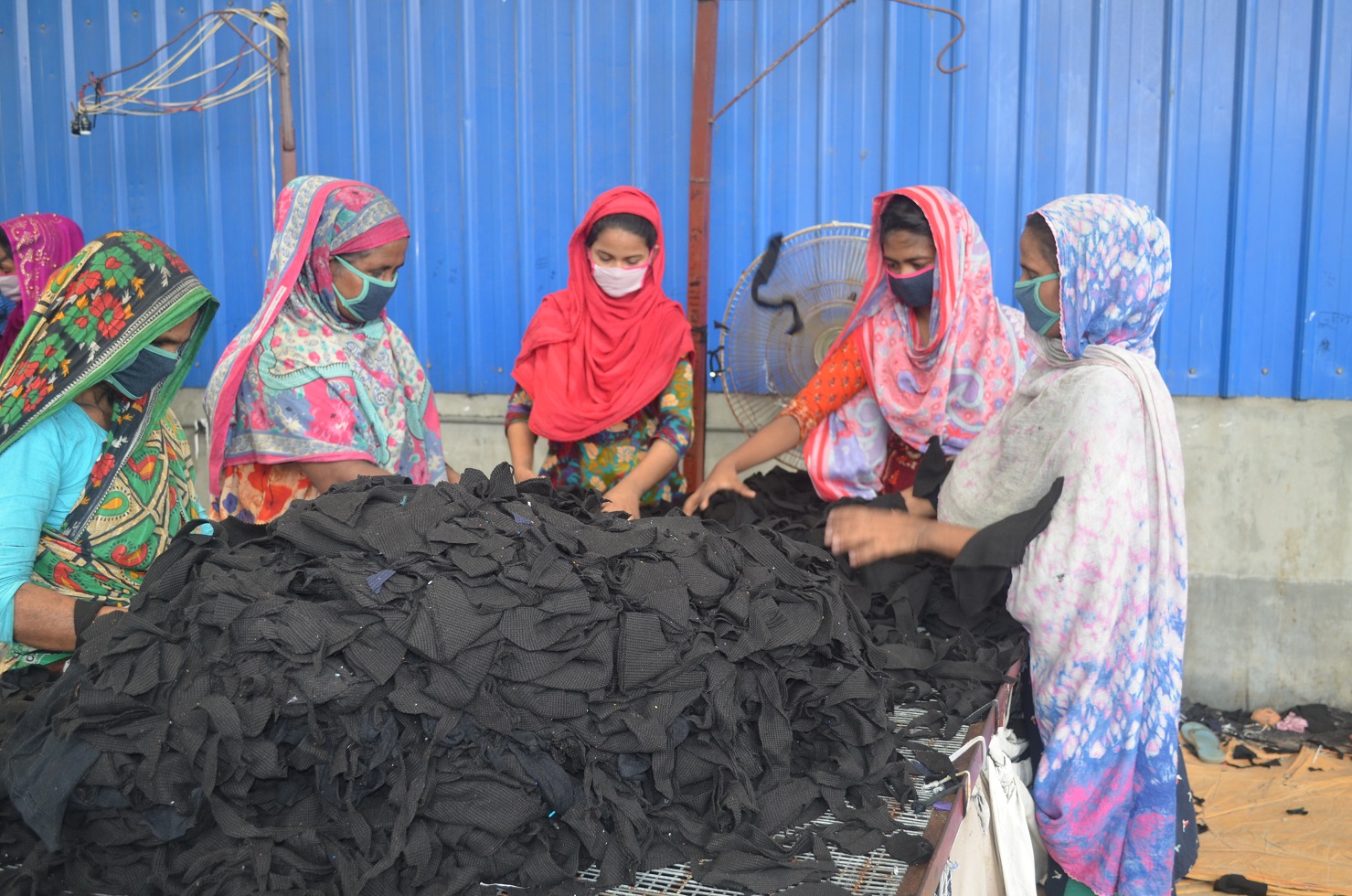
Our sustainable products are made from pre-consumer and post-industrial textile waste, collected from garment factories and production units. Instead of sending these materials to landfills or incinerators, we give them a second life—spinning them into new yarns and fabrics for apparel, home textiles, and industrial uses.
Environmental Impact
Through advanced recycling technology, we deliver significant resource savings compared to conventional cotton production:
- Up to 2,116 liters of water saved per kg of recycled fiber.
- CO₂ emissions reduced by up to 1.73 kg per kg of recycled fiber.
- Energy savings of up to 15.29 kWh per kg of recycled fiber.
(Based on Life Cycle Assessment studies comparing virgin cotton with recycled cotton.)


Benefit | Khetan Group Impact |
Resource Efficiency | Dramatically cuts water, energy, and GHG emissions during production |
Circular Design | Closes waste loops by converting scrap into high-value inputs |
Market Advantage | Enables dyed- or shade-matched recycled fibers—streamlining production and enhancing fiber appeal |
Sustainability Leadership | Differentiates based on high-impact metrics, certifications, and alignment with global standards |
A temperature of 29 to 35 C is congenial for cotton crops with favourable night temperatures. The average annual rainfall is 923 mm, distributed during south–east and northwest, seasons, favouring summer and winter cotton cultivation.
In the Project Location, the soil type is Redloamy suitable for cotton crops. Physical structure, water holding capacity and drainage facilities are good. The organic content of the soils is satisfactory. Crop stubbles of cotton, maize, etc., are ploughed incite to improve the organic matter of the soil, every season. The farmers of the project have sufficient cattle for the production of Farm yard manure.
Assured well water is the common source of irrigation, besides bore well water in a few places, wherever necessary. The quality of the available water is highly suitable for cotton crops.