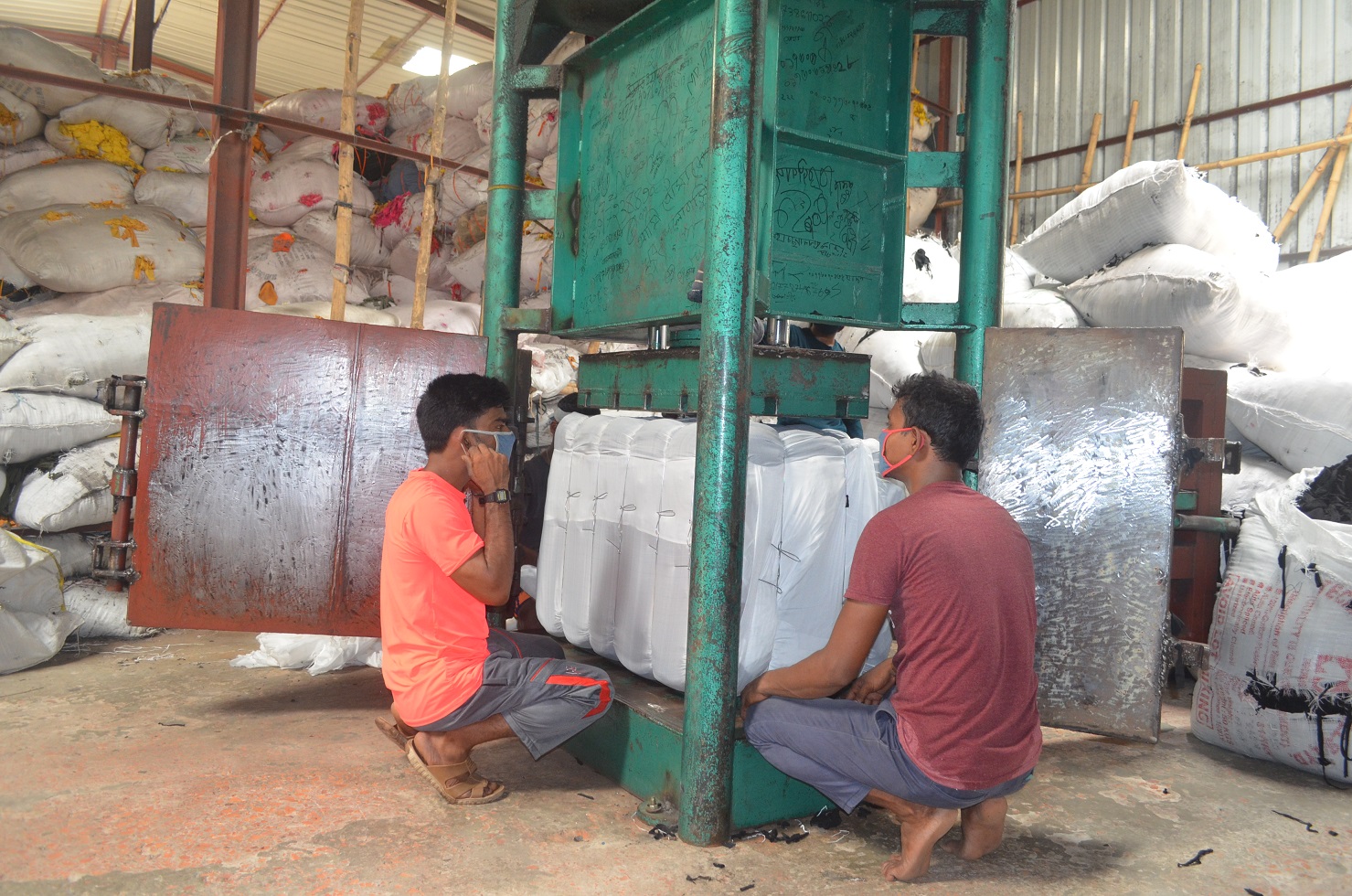
In textile and garment production, not all waste is the same. Alongside soft scraps and cutting leftovers, factories generate a category known as Textile Hard Waste. Unlike fabric off-cuts that are easier to recycle, hard waste comes in more complex forms—often mixed with non-textile components. At Khetan Group, we address this challenge with the same vision we bring to all aspects of circularity: to turn waste into worth.
Khetan Group’s Approach to Hard Waste
Through our recycling-focused operations, Khetan Group is working to integrate hard waste into circular textile systems by:
Segregation & Sorting – Carefully separating pure fiber fractions from mixed or contaminated materials.
Mechanical Recovery – Processing recoverable fibers for blending with virgin or recycled cotton.
Downcycling Innovations – Using non-recyclable fractions in secondary applications such as insulation, stuffing, cleaning cloths, or industrial textiles.
Research & Development – Exploring new technologies to extract maximum value from hard waste, including chemical recycling for complex blends.
Impact
By focusing on textile hard waste, Khetan Group ensures that even the most challenging waste streams contribute to sustainability goals. Our efforts help: Reduce landfill dependency by recovering fibers from difficult waste types. Lower resource demand by substituting virgin raw materials with recycled content. Support circular economy principles by finding value in every stage of production waste.
Waste Reduction
Diverts solid textile waste from landfills.
Resource Conservation
Reduces dependence on virgin cotton or synthetic fibers.
Energy Savings
Lower energy consumption compared to producing new raw materials.
Our Sources of Textile Hard Waste
Spinning & Weaving Units – Includes selvedge edges, loom waste, and thick yarn bunches.